Mona Kabuki Quartey

Spotlight

Introducing Mona Kabuki Quartey ……

What are your views on sustainable funding of social needs in Ghana?

So, in recent times, community support has risen from local to almost global levels due to many factors but predominantly driven by technology and specifically, social media to get the word around and bring in the funds.  I have witnessed on various occasions when an appeal for funds for either a funeral, a friend in need, a stranger in need and sometimes efforts to correct some social anomaly like rehabilitation of street kids, has spun into action and delivered some level of success.

However, what I’ve realized is that whatever the level of success for these crowd-funding campaigns, there’s a lack of “follow through” or “after care” (as it is described in the medical world), once the initial ‘need’ for the funding has been assuaged. Hence, I would like to see this gap addressed by focusing more on ‘sustainable’ funding.

What’s your view on social funding then? Do you think it’s more of a one-time event or like in the old days an ongoing event?

The old adage “it takes a village to raise a child” is my reason and mantra for focusing on the potential rich human resource of our nation Ghana.  We all know that raising a child is not a one-time event and therefore it has become imperative to look at a sustainable process and targeted effort at tackling this need. This type of effort in the recent past, has been largely driven by the Public Sector and to a lesser extent the Private Sector of our economy (separate and/or in combination) as part of good governance and love for one another.

However, the results have not been impactful for various reasons. I would dare to suggest that lack of sustainable funding and donor fatigue are some of the primary causes of the impact failure. This lack and fatigue sets in when the problem appears overwhelming and there is no concerted and targeted effort to see it through to successful completion. I therefore believe that the motivational factors must be clarified to create a sustainable effort.

What do you think are the best motivational factors that may encourage/energise potential donors to support a social cause?

Whether it’s a selfish one or altruistic one does not matter in my opinion so long as it calls one to action for a cause that they are prepared to see to its logical end. For example, a one-time school fees payment, hospital payment etc is good but does not ensure success in solving a much bigger problem. I think that the ‘Big Brother or Sister’ programs have served most communities well but many times it loses its vim as the big brother or sister becomes busy with their own growing family life.

We have also seen social clubs made up of high net worth individuals, like the Rotary Club, Zonta Club and Lion’s Club to mention a few, do some incredibly good work in our society whilst at the same time having fun.  I also find that the alumni support funding via social media is also effective in supporting on a need basis and is sustainable as has been proven by our own GC80 and other year groups that I am associated with.

I don’t have all answers, but I hope that this discussion gets us all thinking and will hopefully generate some creative ideas on how we can establish an environment for sustainable funding for some of the social causes that we would like to support. I believe it’s not about the destination but the miracles along the way.

Asides from ideas on sustainable funding, how else can one help?

Currently, I serve on The Mokasa Women’s Trust Foundation, which was formed in early 2017 to serve women and children across Ghana on a sustainable basis. The foundation approaches its work through a three- pronged approach: Education; Health Care; and Economic Empowerment. The website link is www.mokasagh.org and I hope that some of you would find time to browse and perhaps decide to join in the effort, by getting on board as active members or donating every now and then.

I hope that this has given us some food for thought on a sustainable, targeted approach to structuring our generosity to society.

Hon Mona Kabuki Quartey (Mrs)
1B, 2B, 3B, 4S2, 5S2
House 11

Look out for our next Spotlight Edition on Nadia Simmonds

Emmeline Brew-Graves

Spotlight

Introducing Emmeline Brew-Graves……

What person/quote would you say inspires you?

There’s a quote by the Blessed John Henry Newman (1801-1890 Theologian) which has been a guiding principle over the years. “God has created me to do him a  definite service. He has committed some work to me which he has not committed to another. I have my mission. I may never know it in this life, but I shall be told in the next.

Following on from being in Form 5S1, what made you choose medicine rather than another profession?

I became a doctor because I had to. My parents slowly but surely steered and supported me to study medicine. It was not until I qualified from St Thomas Hospital Medical School, University of London in 1987 that I realised that a medical degree was but a gateway to a world of wonder. Only one of my close friends from Med School still practises medicine. Of the others, one has retired from Banking, another from accounting, another writes musical scores for TV and films. I craved the adventurous and creative genes that my girlfriends were obviously blessed with but hey ho someone must do the mundane!

Why did you choose to specialise in General Practice?

Despite an interest in Obstetrics and Gynaecology, I chose a career in General Practice as it offered the flexibility that I think I needed in both my professional and my personal life. As a General Practioner (GP), I tried all varieties of that existence. I started off as a full-time partner in a practice for 12 years. During that time, I explored other specialties, for e.g. I studied for a Master’s in Public Health and also trained in Forensics. However, I could not choose which speciality to focus on as Public health took me away from patients and Forensics was difficult to practice with a young family.

To straddle the worlds of General Practice, Public Health and Forensics, I stepped down from partner duties and became a salaried GP initially in Dulwich then in Croydon. I also worked in a number of Urgent Care / Out of hours Centres in South London. I retired from General Practice and Public Health in 2018 to concentrate full time on Forensics.

Can you tell us a bit more about this next phase of your career journey in Forensics?

I specialise in the Clinical and Forensic Care of complainants of rape and Sexual Assault. I currently work as a Sexual Offences examiner at the Sexual Assault Referral Centre in London called the Havens (https://www.thehavens.org.uk/) and as the Clinical Director for the Sexual Assault Referral Centre in Bristol called the Bridge (https://www.thebridgecanhelp.org.uk/). Apart from seeing patients and doing all the usual management things I get to teach medical students, nurses, midwives, doctors, police, lawyers and social workers about rape and sexual assault and I also go to court to act as a professional witness in rape cases.

Working with those affected by sexual violence must be a difficult and harrowing area to operate in. How do you ensure you don’t take your work home with you? What coping mechanisms do you utilise to mitigate the stressful effects of your work?

Surprisingly, I find working at the Sexual Assault Referral Centre less stressful than being a GP. Being a GP requires a doctor to deal with lots of problems in a very limited period of time. My role working with people who have been affected by sexual violence allows me to be focussed and I also get as long as is needed to support my patient. The team I work with is small, close and supportive. We are also encouraged to see a Clinical supervisor (psychologist) regularly.

Your passion for your medical career in general and more specifically for ‘service’ to others is apparent. Can you share more of what you’ve found most rewarding?

What I have loved about being a doctor is the connections I have been privileged to forge between individuals and families, sometimes generations of the same family. What I love about my current role as a Sexual Offences Examiner is seeing people at a time of their life that they are in crisis but because of their own resilience and strength they are able to rise above the pain and the hurt and being part of that extra-ordinary journey.

Any other interests you may want to share with us?

The current hostile climate in the UK against Refugees & Asylum seekers has prompted me to work as a volunteer for the charity Freedom From Torture
(https://www.freedomfromtorture.org/). The charity has centres nationwide and works to support (medical, therapy and legal advice) refugees in the UK. My birthday Facebook collection was in aid of Freedom From Torture. Thank you to all who contributed to it.

You did mention earlier about having to juggle your professional life with raising a young family. Perchance did any of your children follow you in the same profession?

I have three awesome children – well 2 step-daughters and one son. None of them are in medicine but have pursued their own passions. My oldest step-daughter makes wedding cakes (https://www.littlecakegarden.com/), my second step-daughter is a BAFTA winning actress and my son is an aspiring teacher and DJ.

Switching gears, your mother Mrs Charlotte Brew-Graves was the first female Headmistress of Achimota. How did you and your family feel about this pace-setting achievement?

Can I start by saying that the whole family is incredibly proud of Mummy. Not only because she was the first female Head of Achimota but also because she has achieved so much in her career at Winneba Training College, Labone Secondary School and her work with female literacy in the UN. That pride has become evident as we have grown older and are getting to see how she has impacted loads of lives. At the time she was appointed we just thought it was par for the course because we grew up with Achimota as part of our lives. As children, we were often taken to visit staff members, then when it came to choosing a secondary school we were only allowed to make one choice on our common entrance form.

I am a third generation Motowner – my maternal grandfather studied at the Grey City, both my parents went to Achimota and all my siblings are Akoras. Mummy not only went to Achimota (1953 Year Group), she taught Home Economics there as a young teacher and was Clark House mistress. She also met my father there! As you can see, she has had a very long love affair with Achimota.

Any final thoughts you would like to share with us?

I would like to end with a little more of the quote from the Blessed John Henry Newman whowill be canonised by the Pope this year “I have a part in a great work. I am a link in a chain,a bond of connection between persons. He has not created me for naught. I shall do His work.

Emmeline Brew-Graves
2F, 3A, 4S1 and 5S1
Kingsley House

Look out for our next Spotlight Edition on Mona Kabuki Quartey

Kwame Antwi-Agyei

Spotlight


Introducing Kwame Antwi-Agyei…..


Most of your fellow Cadbury House GC colleagues lost contact with you after June 80. Could you tell us what you’ve been up to since we left school?

After Motown, I attended the Presbyterian Training College, now Presbyterian University College, and thereafter taught for a while in some basic and private schools. I subsequently earned the IDPM (Institute of Data Processing Management) Diploma I & II. I have since worked with a variety of companies e.g. Sydalk Systems Ltd (a private IT company) and at Bening, Anang and Partners (a private chartered accountancy and management consultancy firm). I’m approaching my 20th year working at DHL Ghana, having worked in a variety of roles, and I’m currently the Ground Operations Supervisor & Dangerous Goods Coordinator for Ghana.


What are some of the changes you have seen in logistics over the years?

Tremendous changes indeed. There has been a revolutionary change. First, it was the shipping of documents and small and miniature consignments. Today, however, we ship huge items such as containers of heavy-duty items. Logistics also includes warehousing and spare parts. We stock items such as IT equipment and automobile spare parts, which we can speedily transport across borders. Supply chain management has also brought about great dynamics in the logistics industry. There has also been a lot of competition, with a lot of private companies involved in the industry.


You have been at DHL for a long time, would you consider working for a rival such as FedEx or UPS?

No, I wouldn’t because I’m getting to the apex of my career and none of our competitors can match up to us. We are the market leaders as far as the logistics industry is concerned and I cannot move below the ladder.


What are some of the highlights of working for DHL?

Working for DHL has been great and worthwhile. As you know, DHL is the most international company in the world, with operations in over 200 countries. DHL has taught me a lot especially the need to work as a team. We make our customers lives easier all over the world and we have changed the way the world looks. DHL brings the world closer to everyone as we deliver and pickup up many of our customers shipments all over the world.

I have worked in DHL in diverse roles such as IT, Training and Development and am currently working in Operations. I have also met many Akoras at DHL, some of whom are still with the company. It’s been a fruitful experience, I must say. Our mission is to provide great service quality to our valued customers across the globe.


Tell us a bit about your family

I’m married to my lovely wife Dinah and we have three grown-up children. My first daughter is a graduate of University of Ghana (UOG) with a BSC in Administration. The second one also graduated from UOG this year and my son is an Akora who completed Achimota this year and is waiting for his results to enter University. He was in Lugard House even though I would have preferred Cadbury, but well, it’s all Motown.


It’s great to hear that your son has followed in your footsteps continuing the proud tradition of generations of the same family attending our beloved alma mater. Some people allegedly say Motown isn’t the same as it used to be when we there in the mid-70s. In your opinion what do you think the school needs to get back to those so-called glory days?

I share their opinion too. As I mentioned, my last son is an Akora who completed Achimota just this year and I had the regular duty of visiting him every other weekend. In my opinion, the aura surrounding the school has waned considerably. I believe it’s due to the short duration of their passage in Achimota (it’s now three years). During our time, the school calendar was five years, forms 1 to 5 and two years in lower and upper 6 th , making a total of 7 years at school.

The school calendar was more exciting as studies were intermixed with more sporting activities, entertainment (pop chain etc.). Today, the duration has been shortened. The population has also increased significantly. I’m told the current school population is about 3,000. Can you imagine that?! We also had a much better time enjoyed as during our time the school menu was much more inviting than it is now.

Right from the moment you enter through the main gate, near the swimming pool, you sense that the feeling and mentality of Achimota is emotionally missing. I commend the current house staff though for managing such a huge student population. I believe what we are embarking upon the Old Achimota spirit can revive and bring back the old school nostalgia. The glory days can be revisited, the Kuzuinik and the school anthem “From Gambaga to Accra” can be re-enacted.


Do you have any charity interests or activities that you may want to share with us?

I have personally not been involved in private charity or mentoring activities, but in conjunction with my company and as part of our corporate social responsibility, we have adopted a school nearby, the model nursery where we offer social support in developing and improving their facilities and make yearly donations. We also conduct activities to support the SOS School in Tema by mentoring and offering and raising hope and helping them to acquire skills to aid them in their future endeavors and I do play an active role in this.


Do you have any hobbies or social interests?

I’m an ardent football lover and support Liverpool football club.


Is this finally Liverpool’s year to win the EPL after 30 years of hurt?

Yeah, Liverpool, we never walk alone. It should have been double for us this year, but we missed out on the EPL. I hope we clinch it next season but last year was phenomenal especially our second match with the dreaded Barcelona. You saw the result and can attest to the fact that we were indeed outstanding on that day.


Kwame Antwi-Agyei
1C, 2?, 3B, 4?, 5?
Cadbury House

Look out for our next Spotlight Edition on Emmeline Brew-Graves

David Okai

Spotlight

Introducing David Okai…

Why don’t you tell us a bit about yourself?

Hello GC, I was president of this incomparable and blessed Year Group for quite a while, taking over the reins from the incredible stewardship of Yvette Dzeble. Those were pre-WhatsApp days and Tunde and I had a terribly difficult and lonely time of keeping us alive. I’m a registered Ghanaian Architect working with another Architect and year group great, Charles Blankson-Hemans, in a design/project management studio.

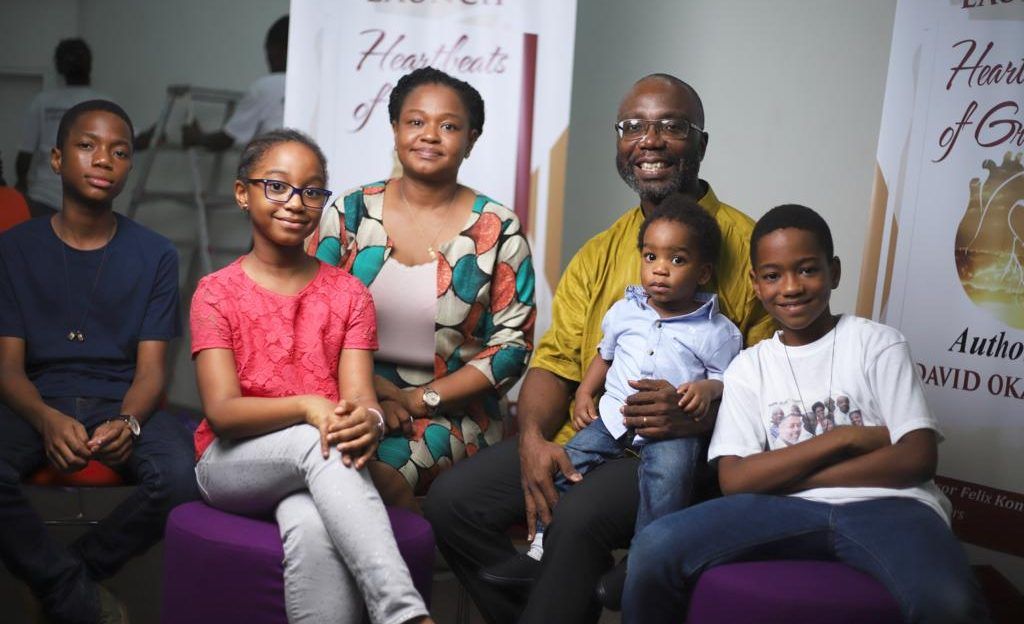
I’m husband to a wonderful Akora called Pamela (1998 Year Group!) and father to four divine kids (15-13-11-2). Pamela and I run The HeartFelt Foundation, which tries to assist toddlers with Congenital/Acquired Heart Disease and their families, with physical assistance when and where possible, and lots of emotional and experiential support.


What led to you and Pamela running The Heartfelt Foundation? Any particular reason for this worthwhile endeavour?

The Foundation was created after my own near-death cardiovascular failure in 2016, which saw GC, and particularly Dawid Konotey-Ahulu and Reynold Quartey, amongst a handful of God-sent intercessors stepping forth in extraordinary circumstances to save my life with literally minutes to go, including I should add, a MOBA Professor of Interventional Cardiology called Nicholas Ossei-Gerning.

We reasoned that adults have the luxury of making lifestyle choices, some of which can lead them to perdition, but new-borns and toddlers who rely on others to make those choices can sometimes end up with terrible life-changing and life-threatening conditions like ‘hole-in-the-heart’. Many distressed families who have such kids are physically and mentally at their wits  end, and many abandon these kids. You may not know this, but there is only one Paediatric Cardiologist in Ghana.


You took part in a Walkathon a couple of years ago. What was your aim? How did it go and is there any advice you can offer on healthier lifestyle choices for GC following your experience?

So a month after we returned to Accra after my surgery in Wales, to everyone’s horror and against conventional wisdom, I decided to take part in the 5km Walkathon of the Accra International Marathon. Yes, I consulted my doctors and family. For me, it was a line in the sand, a need to ‘walk’ away from such a terrible personal episode and to show just how beautiful God’s Grace is. I was ably supported by my ‘cohorts’, Adeo, Reynold and my brother Charles. Can’t tell you how good finishing that felt. I have subsequently done a few more and will continue in that vein for as long as I can, my limitation being a painful chronic lower-back issue.

My mission is to actively encourage anyone I meet to religiously check their medical numbers (BP, Blood sugar, Prostrate et al) at least once a year, to regularly exercise at least 30 minutes a day (I recommend swimming or even better just a brisk 30min walk), and to carefully audit lifestyle choices ranging from smoking, drinking, nutrition to relationships, mental and spiritual balance, etc. and to live life to the Max and not just talk about it. There’s something I learnt called Congruence where you walk the talk. For best results start and finish your day with prayer!


Any other areas of interest you might wish to share with us?

I’m also a first-time author, having chronicled my cardiac narrative in a book called ‘Heartbeats of Grace’, which was published in 2018 by our own Nana Kegya (Amonoo-Neizer) and her husband, and my post-graduate mate in KNUST back in the eighties, Professor Kwaku Appiah-Adu. I am occasionally invited to speak to people about my encounter with God’s Grace and the importance of healthy, regular life-style habits and relationships. I also run the OAA 1951 Year Group Scholarship Trust for selected needy kids in Motown (my father’s year group), and Pamela and I also occasionally mentor these kids.


What’s the one dream/ambition that you would like to achieve?

My Big Hairy Ambition is to establish a state-of-the-art (Children’s) Heart and Diabetes Centre in Ghana. That and to be around to give my little girl away when she’s getting married!


You were originally in Gyamfi House and moved to Guggisberg for your sixth form years?
Any reason for the change?

I think what must have happened was that not too many G’berg mates returned for sixth form after O’s (if I remember it was just Ofori-D and Rio B), so the school decided to transfer Sammy La and myself from Gyamfi to augment the ‘native’ numbers. It was quite a baptism of fire for me I can tell you, but after the first term, I came to enjoy the change. 

And finally, what are we likely to see the Okai Family doing on a Sunday afternoon?

Sunday is absolutely Family day for us, so after church in the morning, we sit down to a family brunch (which I have to prepare), then there’s a much needed rest that knits up the sleeve of ravelled care (thank you Mrs Sey). The only outing this day is to the grandparents. Otherwise, all energies are channelled towards each other, moulding and mending and celebrating.


David Okai
1C, 2A, 3C, 4S3, 5S3, L6A and U6A
Gyamfi House 1-5/ Guggisberg House L6-U6

Look out for our next Spotlight Edition on Kwame Antwi-Agyei

Dawid Konotey-Ahulu

Spotlight

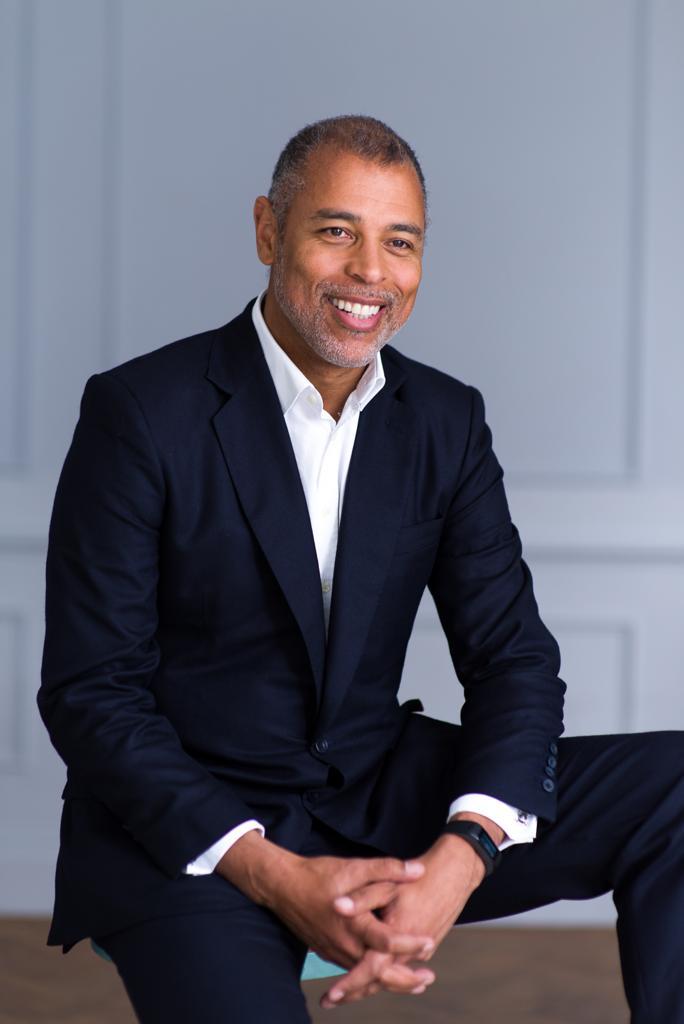
Dawid Konotey-Ahulu is co-founder and chairman of Redington, an investment consultancy, and winner of the Black British Business Entrepreneur Leader Award.


How does it feel to be awarded a Black British Business Award?

It is a real honour to win the Black British Business “Entrepreneur Leader” Award. The recognition of people with black heritage and the part we play in the life of the UK is part of an awakening that is rapidly changing the narrative. I genuinely believe we are at a tipping point from which there will be no turning back. Some of the smartest, most engaging and right-thinking individuals that I know are from the black community. It’s time they were recognised for what they bring to the table.


Tell us about your career – how did you start out, when did you get your big break, what path have you taken?

I started my career as a junior barrister in Lincoln’s Inn back in the late eighties but checked out of that world and into investment banking in 1991. That was probably my big break. One of the MDs in the bank where I was then working as a lawyer mentored me and backed me to work on the derivatives structuring desk. That was a big deal back then especially as I was a lawyer and didn’t have an economics background. It took me a year to get even a basic understanding of the capital markets. In 1997, I was asked to run a derivatives desk in Singapore and in 2000 I moved to Merrill Lynch where I was responsible for doing a lot of the early pioneering work around helping pension schemes to manage the key market risks they were facing. That was pretty entrepreneurial work but I really became a true entrepreneur when I left Merrill Lynch and, together with one of my colleagues and best friends, Rob Gardner, set up Redington, a new firm that had the purpose of changing the way the pensions industry managed risk.

What are your thoughts on Black History Month? Do you think it’s important/necessary? What kind of message do you think it sends to society?

Black History Month is so important because it brings a focal point to the many discussions and conversations that we need to have. We are living in a new age of enlightenment, in which, as a society, we are facing up to several inconvenient truths about the way we treat people. For example, it is now rightly the case that if you treat a woman badly at work or in society, you are more likely than at any point in history to be called out for that behaviour. Look at what has happened to Bill Cosby and Harvey Weinstein. It’s been several thousand years coming, but now it’s a thing. The same is true for many other minorities, and, at this juncture in history, Black History Month serves an invaluable purpose as it brings us all together in the big discussion.


Can you share some of your experiences of being a person of colour in the workplace. How you come across barriers or prejudice and if so, how have you overcome them?

In 1987, as a trainee barrister, I applied for a pupillage (internship) in chambers in Middle Temple, London. A senior barrister there told me: “Look, we just hired a black guy. You can come do the pupillage, but we won’t offer you a place afterwards. We can’t do it two years in a row. I hope you understand.” I’ve never forgotten that episode in my life but the truth is that I love my racial heritage and I wouldn’t change it for anything. I’ve come to realise that my upbringing (I was raised in Ghana until the age of 17) and my parentage have made me who I am. I grew up in a time of revolutions and coups d’etat and life definitely wasn’t easy. But in many ways it was also idyllic. My friends and I were inventive and innovative and resilient. All of which have allowed me to adapt to my circumstances and make the most of them.


There is lots of research that suggests people of colour still experience prejudice in the workplace. Do you agree and If so what would you like to see happen to change that?

I speak to a lot of people who believe that they are held back by their colour, by a systemic “understanding” that they may get into a good firm, but they will never make it into the higher echelons. This is too complex an issue to answer here but there is no doubt that we need to grasp this nettle and have a mature and well-reasoned conversation about what needs to happen. The gender agenda shows what can be achieved when a minority group determines to bring about change. So I would like to see this discussion happening across our industries and at every level in every firm: how can we ensure that more people of colour are brought into the industry, mentored
and helped to achieve their true potential, and, ultimately, routinely play a key role in the management of our firms. Some of us are now engaged in the start of a movement we have called #talkaboutblack. If you haven’t heard of it yet, you soon will.


You have set up an organisation that teaches young black people the essential art of public speaking. Tell us a little about that – why did you set it up, what impact is it having?

Yes! I have always believed that if you want to make an impact on society, it is not enough to have great ideas and beliefs about how to change the world. You also have to be able to communicate them powerfully and eloquently. In other words, you must be able to hold the room spellbound. This is very hard to do and isn’t taught properly (or at all) in our state schools. So, you have some incredibly smart young people who could be changing the world, but who don’t have the skills to do that and aren’t using their time effectively or to do good. I set up Spellbound to provide young people with those skills and I have taught the course at several Universities around the country, usually to the Afro-Carribean Society members during a weekday evening. To do it properly, I do three evenings over three weeks for about 2 hours each. The results are that people who start out with a deep fear of public speaking soon learn that far from being feared, it is one of the most powerful things you can learn to do. As Barack Obama demonstrated.


Finally, have you got any words of advice for your people of colour who want to forge careers in investments and/or business?

This is a very hard industry to get into, but, from what I see, more and more firms are beginning to recognise that it is vital to have people from more diverse backgrounds within the organisation. So, there has probably never been a better time to be black if you want to get into the City of London. I say that with a large dose of hopefulness but I do think it is true. For your part, you have to get your act together in terms of your academic achievements. That doesn’t mean you need to go to the usual suspect top universities (although that will always help) but you do need to get some very decent grades in your exams and demonstrate that you mean business. So, join a few societies and work as hard as you can. The day is soon coming when someone like you will be at the top of the recruiter’s list.


Dawid Konotey-Ahulu

1A, 2?, 3?, 4S2

Lugard House


Look out for our next Spotlight Edition on David Okai