Martha Fillastre

Spotlight

Martha Fillastre, known to some of us by a couple of nick names, has been a very active member of the 1980 year group even though she did not join the initial group of ninoes in 1975. Although she is resident in France, she regularly attends group functions in London. Martha has been happily married for the past 23 years and has been blessed with three beautiful girls aged twenty, sixteen and thirteen. She also has a cat who is diabetic.


Most of us started Form One together but you joined us in the sixth form. Why was that? 

My elder sister went to Aburi Girls Secondary school so my parents in their wisdom decided we should be together. As it happens, my sister finished form five in Aburi Girls and entered Achimota so it was a natural progression for me. I also entered the sixth form and thoroughly enjoyed my two years, with Mrs Sey being my favourite teacher.

 I was always getting into a couple of scrapes like hanging out on the blue bench in front of Lugard house, running off to go and jam at Cave du Roy with Ebo Lamptey, Yaw Boohene, Tutu Agyare and other’s in Pop Sowah’s Subaru, and being pursued by Zors in the street while on our way out of school. Worst of all, I was suspended in my first term for allegedly gating with Ben Owusu Frimpong (BOF).


Tell us more about Martha  

After spending a fantastic two year stint in Motown, I entered the University of Legon to study for a degree in French, Literature and Philosophy. After graduating from Legon and spending two years of National Service at the then UST, I came to France on a scholarship to study applied linguistics. The first two years after graduation were really tough since it was difficult to find a job in the early nineties as a non-EU member.

The simplest solution was to become a freelance translator, which I did in 1993. Translation is a fascinating job because you learn something new each time. Today it may be translating a cookery book, the next a maintenance manual for a submarine, a company’s annual report or a sales contract. However, in recent years, globalisation and artificial intelligence have affected the translation industry and many companies are increasingly reluctant to pay for good quality translations, preferring to use translators from low-cost countries or even machine translation.

That led me to diversify, and in 2016, I went back to school to do a Masters in Intercultural Management. Today, in addition to translation and lecturing, I provide intercultural training to expatriates going to work or do business in Africa. My ultimate aim would be to train Africans to work with foreigners. Plans are underway for this new venture.

Are you involved with other pursuits outside work?  

I have been a local councilor since 2014 and the Deputy Mayor of my small village since 2015. I have also been the President of the local chapter of the parents’ teachers’ association, in charge of two secondary schools since 2016. Running all aspects of village life has been a very fulfilling experience: managing the school, fixing day-to-day problems, developing local infrastructure. Being a mayor has really given me a different perspective of life. Although we do get an allowance to cover basic costs, it is in effect a voluntary role. I have learnt how to serve the people and solve all kinds of problems without thinking of personal gain. I have been blessed to work with some really dedicated people who actually want to make a difference. Sadly, I will not be standing for re-election because we will be moving to another town in the South of France next year.

What positive impact has being a Mayor had on the lives of the villagers?

Due to the outbreak of COVID-19 epidemic, the government has asked the outgoing teams to stay on so the new teams are not immediately saddled with the crisis. Unfortunately, the Mayor suffered a stroke three weeks before the elections. Instead of handing over on 20 March, I’m still acting Mayor. Talk about a chapter of accidents! I had to organise the elections, with all the sanitary precautions. On Election Day, I was in the town hall from 7 am to half past midnight. This would not have been possible without the support of my family.

My job today, since everything is practically at a standstill, is to ensure that the lockdown is being complied with, make sure that the elderly people and other vulnerable people are being looked after. Sometimes, I even end up going shopping for them. Luckily, we have had only two cases in the village, who are doing well.  


How is France coping with the lockdown and COVID-19?

After three weeks, things are beginning to sink in although, since the curve has not started to flatten, people are a bit sceptical. The lockdown is being questioned by the French, who hate things being imposed on them, and people are wondering if more testing should not be done. What I have observed about the epidemic in France, is the increase in actions of solidarity, with people looking out for their neighbours, whether or not they knew them before. We now have a solidarity WhatsApp group in the village, and people are learning to know each other and focus on the important thing. Hopefully, that will be one good outcome of the epidemic.


How do you relax after such a busy work schedule?

I love exercising so I enjoy Zumba, Pilates, Yoga, Hiking and Jogging. My favourite pastime is travelling to a different country lazing about on the beach, tasting the local dishes and spending quality time with my family on holiday. I have been to Japan, Cuba, Malta, Tunisia, Morocco and most of West Africa. However, my favourite country is Greece.

Martha Fillastre  (nee Asmah)

L6A and U6A,

Clark House

Solomon Adegbie-Quaynor

Spotlight

Introducing Solomon Adegbie-Quaynor (aka Slack Barry) ….


What were you up to soon after leaving 6th form in 1982?

After Achimota, I left Ghana to study in the US – BS in Applied Physics from the Atlanta University Center, Masters in Electrical Engineering from Georgia Tech, and an MBA from Northwestern University.  In between Georgia Tech and Northwestern, I was a professor in Math and Engineering at my alma mater, Atlanta University Center. The best four years of my young professional life!

After B-school, made a U-turn from Math/Engineering and went into investment banking in NYC with Merrill Lynch for three years and then Bear Stearns for two years, focusing on M&A, IPOs and leveraged transactions.  However, this U-turn was not by accident as while I was doing my Masters in Engineering, I kept taking Finance courses as I admired Michael Milken and Reginald Lewis, two well-known investment bankers worldwide.


After your initial working years in the US, what made you decide to re-locate to Africa?

During my tenure as a Vice President at Bear Stearns, I quickly realized that the successful investment bankers were those who had the right and strong client relationships and not those with product expertise, that is,  they lived in the same neighborhood growing up or as adults, went to the same universities and were friends, were in the same country clubs with the CEOs and CFOs of our target client companies, or at worst had one degree of separation with a mutual friend who could create these links for them!

Clearly, I did not have these factors in America, so I decided that after 17 years it was best for me to move to Africa where I may already have or could build these relationships quickly. I explored opportunities with Goldman Sachs, Morgan Grenfell, my former employer, Merrill Lynch, but quickly realized that they just wanted to parachute in and out of Africa (primarily South Africa) to pitch for deals in the resource sectors.  No real commitment!

So while I was looking for corporations/institutions where I could harness my finance skills in Africa on a sustained basis, I came across this new animal called development finance institutions in the form of the International Finance Corporation (IFC), private sector arm of the World Bank Group.  My recollection from childhood was that these were the Bretton Woods institutions that imposed conditionalities on African countries!  Needless to say, I joined IFC and worked across the globe but made it clear that I joined to work on Africa.  I have since lived and worked out of Ghana, South Africa and Nigeria, invested and financed companies in various sectors from financial services – banks, insurance, microfinance, PE funds; TMT – telecoms, media, technology; agribusiness; heavy industries such as cement and fertilizer; power; transport – ports, airports, railways, airlines; VC including fintech; commercial property – shopping malls, hotels, warehouses; affordable housing; water.


Can you tell us a bit more about the next phase of your career?

After 20 years at IFC, I decided to leave to pursue select leadership opportunities in businesses I enjoy as my last structured professional hoorah before my type of “retirement”.  Until the right leadership opportunity comes along, I am doing the following: serving as a senior advisor to Rothschild investment banking across sub-Saharan Africa (excluding SA): senior advisor to two major west African PE funds undergoing restructurings; Senior Advisor to IFU, the Danish development finance institution; serve on the investment committee of a $350M PE fund; on select boards of key companies/institutions creating risk asset classes for African pension funds, especially in infrastructure; and Chairman of a women-founded African foods company. Best way to describe my career so far is that I have been an investment banker harnessing the development finance platform to deliver positive impact in people’s lives in my beloved continent Africa, while making good investments that deliver attractive financial returns!


What profession have you enjoyed the most in your varied career?

While I absolutely enjoy investment banking and development finance, being a college professor was my most enjoyable professional experience.  I woke up excited to go to work and did not want to come home at the end of the day.  That is because I like to teach, coach and mentor young people to be the best they can be.  It is not a sprint but a marathon, and people develop and learn at different paces.  I look forward to teaching seminars at various universities when I am in my final phase of active “retirement”.  Otherwise, it will be my grandchildren that I will be teaching! ?


What about Family life?

I am married to Linda (nee Thompson) who went to Mfantsiman. We have been married for 25 years and have three wonderful children.  Linda is a Partner at Deloitte Consulting in Nigeria heading the Clients & Industry and Financial Services practice in West Africa.  Our eldest daughter Kwenorkie will be 21 years old this year and attends Brown University and the Rhode Island School of Design in Providence, RI.  Our next child is our son Nii Addo who will be 19 years old this year and is in a foundation program at Leeds University in the UK.  Our baby daughter Kwenorkuor will be 15 years old this year and she is with us in Nigeria in secondary school at CIS in Lagos.

What do you do for relaxation?

I am a workaholic but mix in sports for relaxation and health maintenance – tennis with a trainer sometimes, cycling 20-30km every other day when not traveling, volleyball (can’t jump like I used to), basketball with my son who is 6’7” but my daughters join sometimes, swimming, and exercise walking. Given my traditional vocation of fishing as a Ga man, I just love the sea!  Getting out for a boat ride, sitting on the beach, swimming occasionally, walking along the sand, and playing beach volleyball, are absolutely relaxing. Spending time with my kids discussing their topics of interest and playing and engaging them is also relaxing.


Of all the countries you’ve visited in Africa, which would you describe as the most beautiful and why?

In Africa, and as it regards pure beauty as a country, it is South Africa!  From game reserves, to spa resorts nestled in nature, to the beautiful mountain peaks of Cape Town, then the beautiful seaside villages such as my favorite Simonstown, sumptuous variety of lighter foods in the best restaurants, to the vineyards and wineries in the western Cape, and to the absolutely best architecture and building designs of homes in the world, South Africa reigns supreme.  However, if you were to ask me which city has the best potential for what my dreams are, it is Freetown (Sierra Leone). I call it the Monaco-wannabe of Africa.  The high mountainous peaks immediately overlooking the ocean is where I would like to build a holiday home in this war-torn country that is on the mend!


Retirement loom around the corner for most of our year group, and after being well travelled, which country can you foresee spending your retirement years and why?

Home is home! Home is where you find family and old friends. So after all the travels, it will be to come home to Ghana. Have a home in Accra as the center, spend some time at my father’s farmhouse near Aburi, and spend most of my time in a small beach house I dream of building in either Ningo or Lekpongnon which are off the Accra-Aflao road. Going to the canoes as they bring their haul of fish on land, and eating organic vegetables grown nearby, engaging with the villagers and supporting community development. 

If you asked if there was another country apart from home where I would like to spend 3-4 months of the year on the beach in a small beach house, it would be Barbados.  Linda selected Barbados as her holiday spot for her 40th birthday and we absolutely had fun there together.  Not the ritzy part of Barbados but rather the rustic part with the native people of Barbados.


And finally, what do you wish you had taken more seriously in Achimota?

Learning languages especially French!  As a pan-Africanist, my limitation is I do not speak French – would be good to speak Portuguese and Arabic but if I cannot manage French then no hope.  I wish Achimota had pushed us and that I had also had the foresight to take it seriously.  Ghana is bordered by three French-speaking countries.  How are we going to achieve regional integration and its benefits when we do not speak these major languages of communication?

Solomon Adegbie-Quaynor

1E, 2E, 3C, 4A, 5A, L6E, U6E

Lugard House

Sammy Lartey

Spotlight

Introducing Sammy Lartey …..


Can you tell us a bit about your journey since 1980?

I returned to 6th form and discovered that David Okai and I had been shipped to Guggisberg as the Gyamfi guys had returned in their numbers and Guggisberg was quite empty. I also initially started off in L6M, but as I realised my mathematics was better than biology, transferred to L6E after a couple of weeks. I was almost made Senior Prefect, but did not think I would have what it took to lead, besides I was doing too much sprints (100m, 200m and 400m) and was team captain for the School’s athletics team.

After Motown, I was part of the ‘Exodus’ to ‘Greener Pastures’ – United States, United Kingdom, Italy, Germany – anywhere to get away from Ghana circa 1980-1985. I was with the UK crowd with ‘Visa on Arrival’ if you had a relatively good story and support system from family and friends (friend in this case being girlfriend who became wife). Add the acquisition of the National Insurance (NI) number to get a job (I acknowledge an Akora GC) for this from the first week in McDonald’s (Kilburn High Road Branch to be precise).

Over the subsequent years till 2010 in the UK, my career involved working in Logistics/Operations (UPS, Palmer and Harvey Snacks, Yakult UK ltd), Marketing (Proctor and Gamble) as well as a Branch Manager within the High Street Retail Wines and Spirits industry. I also completed my degree in Business Studies during this period. 


After years of working in the UK, did you encounter any initial issues upon your relocation to Ghana?

The UK seems to have more opportunities, but you are labelled with the previous roles and not given the chance to prove any other skills acquired except what the CV indicates. In Ghana, transferable skills are recognised but there are not as many opportunities and therefore it’s more difficult to move from one organisation to the next.


Over the past decade, you’ve worked in Liberia and Sierra Leone. Are there any comparatives to Ghana?

A different form of corruption exists in all three countries. Ghana has its’ own way of corruption but the level of poverty, compounded by the internal civil wars in both Liberia and then Sierra Leone means that extracting money illegally is done in a more aggressive way.

An example, the Liberian has a story and a line each morning to involve their Police (they would obviously benefit from the scam) about you not making a payment which was due to them, even when they have signed that they received the payment and then causing some inconvenience or delay to your schedule and this included/with the connivance of employees you could have worked with for a year or more.


Can you enlighten us a bit more about your work in Liberia and the environment?

My job was the Administrative Manager of a family firm which had won a contract from the West Africa Power Pool (WAPP) for the connection and distribution of power between the West African Union countries. My duties ranged from securing visas and work permits for the staff from Ghana, payroll, clearing, managing a fleet of trucks and transporting materials to site 200 miles away, then to meetings with ministers including HE Madam Ellen Johnson-Sirleaf as this was a flagship project of providing cheaper electricity from Ivory Coast to some of the eastern parts of Liberia. Part of the role also involved travelling to Croatia and Egypt for the Factory Acceptance test (FAT) for the generators. Most of Liberia is powered by fuel power generators.

This put the organisation but also the staff  in the public eye. We completed part of the contract in and around 2012 in the Nimba County area and it was great to see the street lights and businesses connecting to this grid now being powered by these transmission lines that I had a hand in constructing.

Liberia has lots of beautiful beaches plus picturesque mountains, but unfortunately part of the road network outside Monrovia was deplorable.

What about Family life and are there any difficulties in working alone abroad without your Wife and Children?

I got married initially in the late 80s, divorced and subsequently re-married in the late 90s. I’ve got three Daughters and two Sons with the age range from 31 to 17. 

You miss the family and in the third or fourth year away from London was quite glad the contract had come to some kind of conclusion and I could hand over, although phone cards, holidays and air tickets were built into the terms and conditions.


As Chair of the Cadet Planning committee for the forthcoming Founders day, can you enlighten us of preparations and festivities planned for the event?

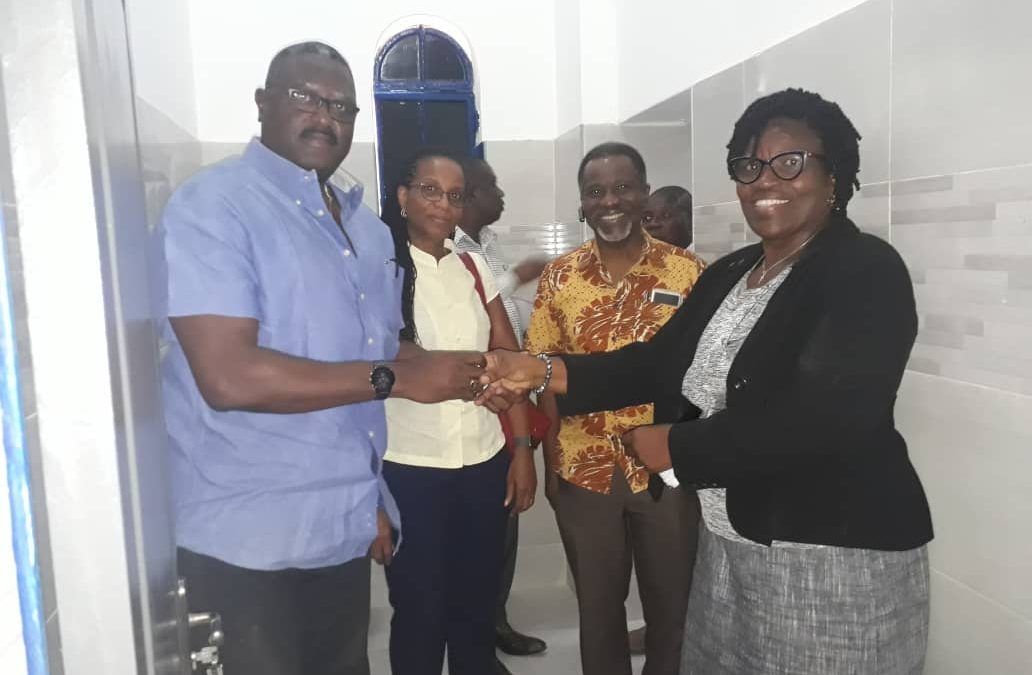
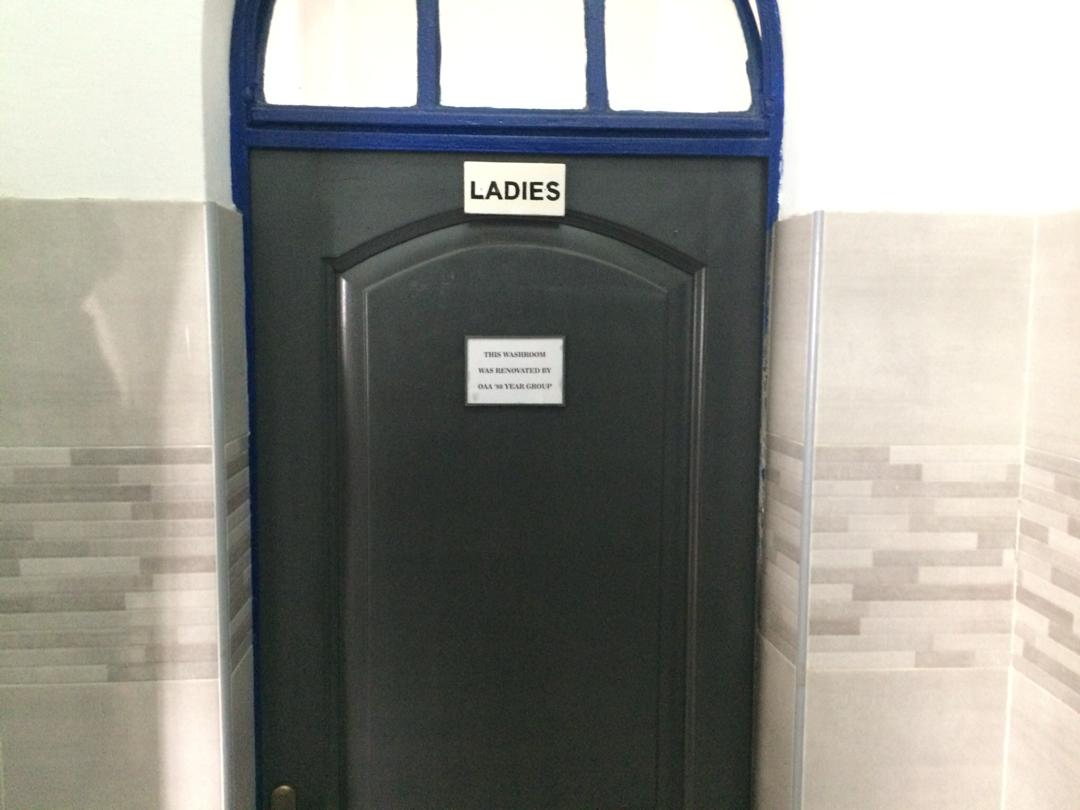
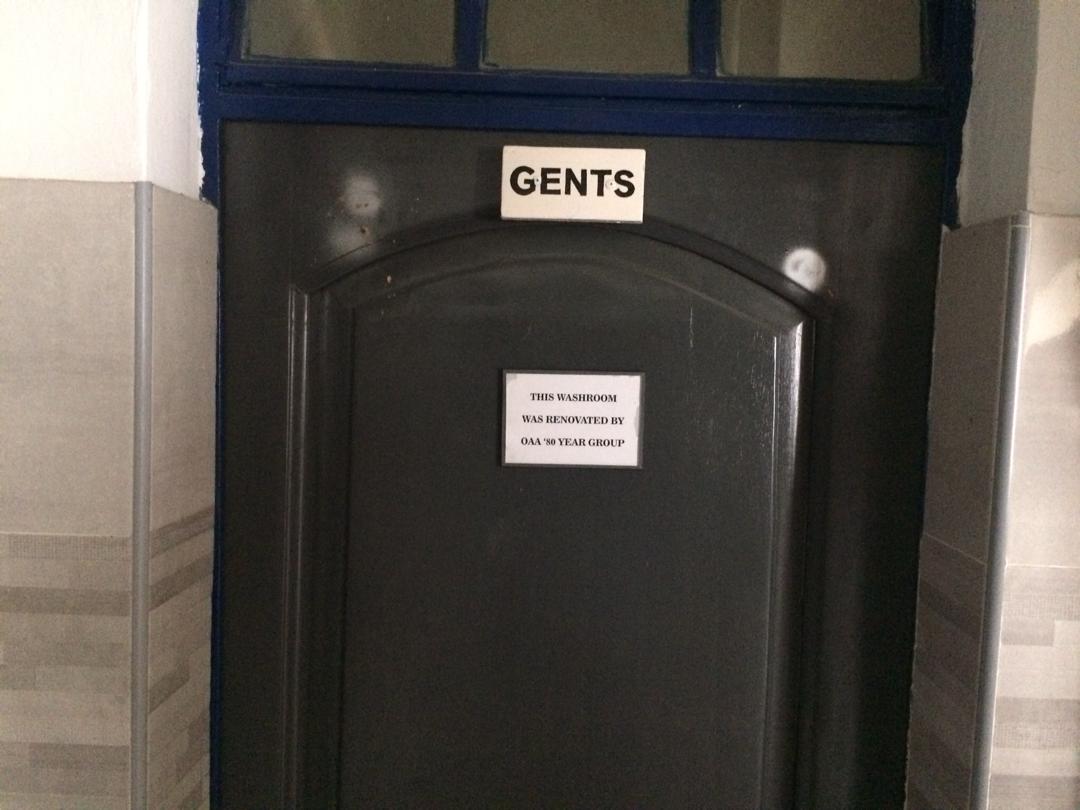
Although I am the lead for the 1980 group of the cadet corps, Hoffman Lartey has been excellent in the arrangements especially as he has been to most of the meetings and the 1970 group had a head start on what needed to be done. It seems we, the 1980 representatives, are tagging along with most of the planning and activities. Our Project (Refurbishment of the staff Washrooms) was completed within the relevant tight deadline by Hoffman Lartey and was handed over to the school a couple of weeks ago.


Who are we accountable to and who are we accountable for?

God has a plan for you and OAA 1980 (Good Company). Please use your skills and talents for you, family and friends including this group, the country and perhaps internationally as well. I believe paths cross for a reason and there is so much evidence of this in our lives therefore I take this opportunity to say thank you to everybody for being part of the story so far.

“When our books are laid aside and we scatter far and wide……”


You hinted earlier about being the GC Usain Bolt whilst you were in 6th form, Are you still an active or armchair sportsman these days?

I was the Usain Bolt of the time but transferred the speed to playing on the wings (Number 11) in football. In the UK, the football season in London was in the winter and it was a bit too cold and so I became goalkeeper for the team I was with (I could pad up and keep warm). However, these days in short I am an armchair sportsman now.


And finally, how will you be celebrating your impending birthday early next month?

Most probably a quiet one on the 2nd but definitely a louder one on the weekend of the 6th, 7th and 8th of March.

Sammy Lartey

1A, 2D, 3?, 4S2, 5S2, L6E, U6E

Gyamfi/Guggisberg House

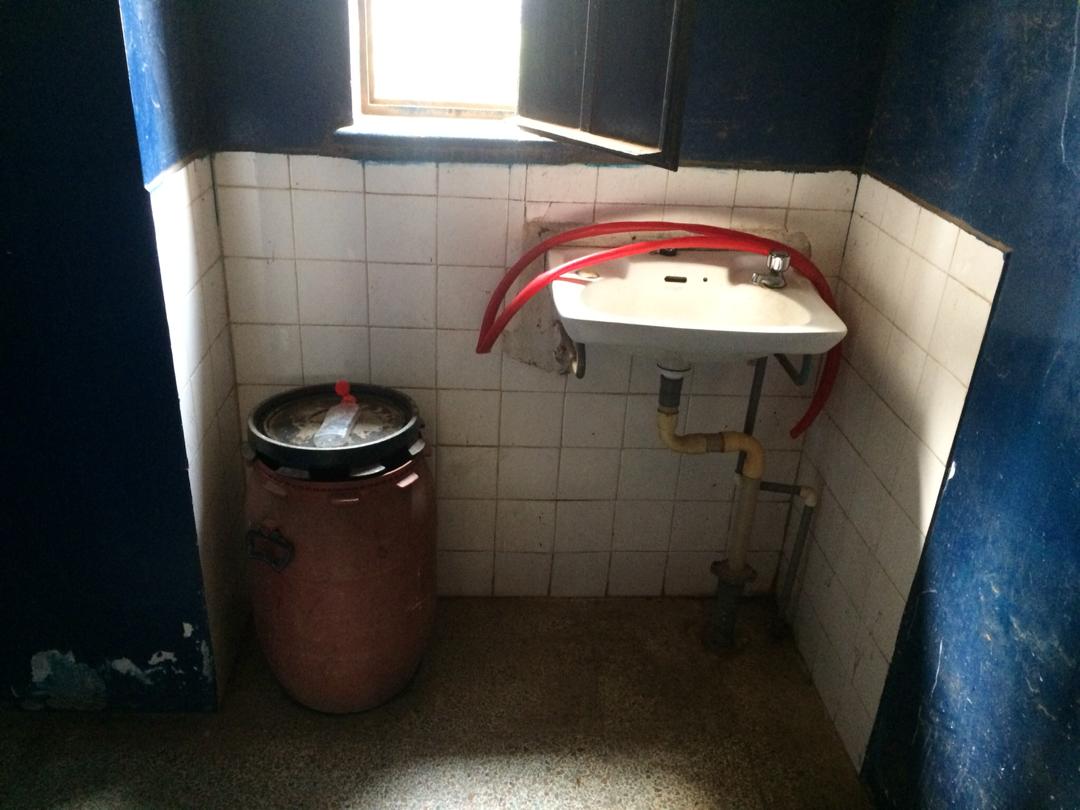
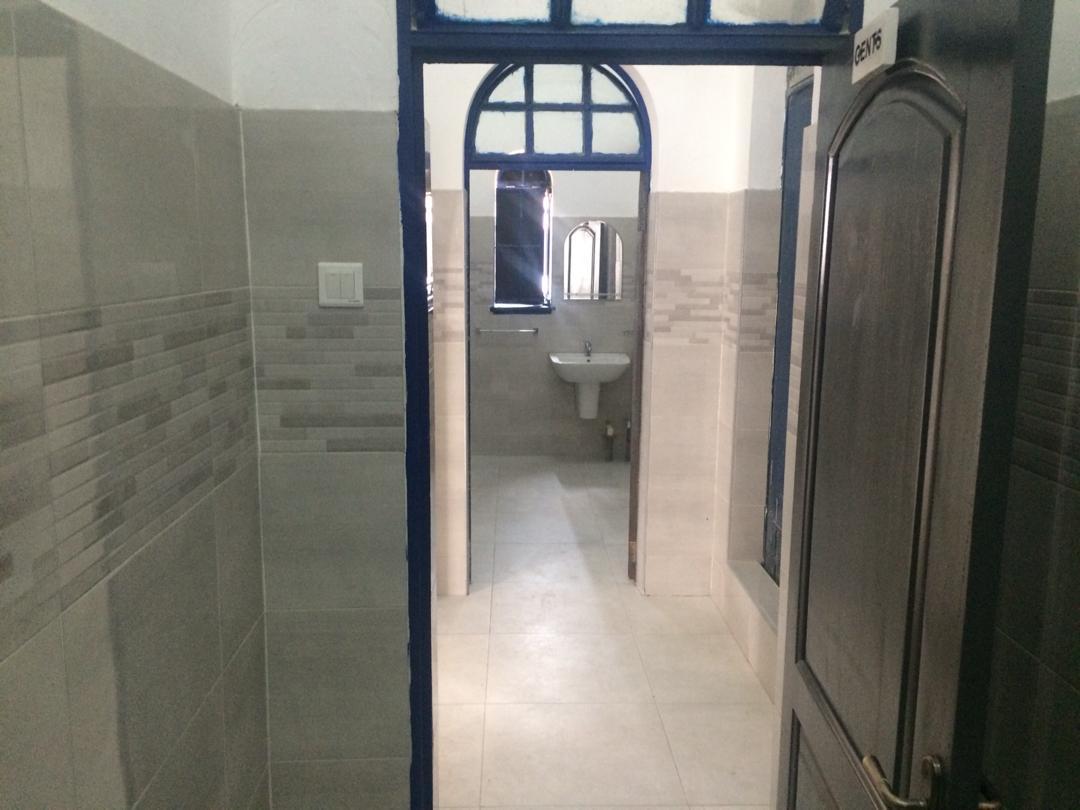
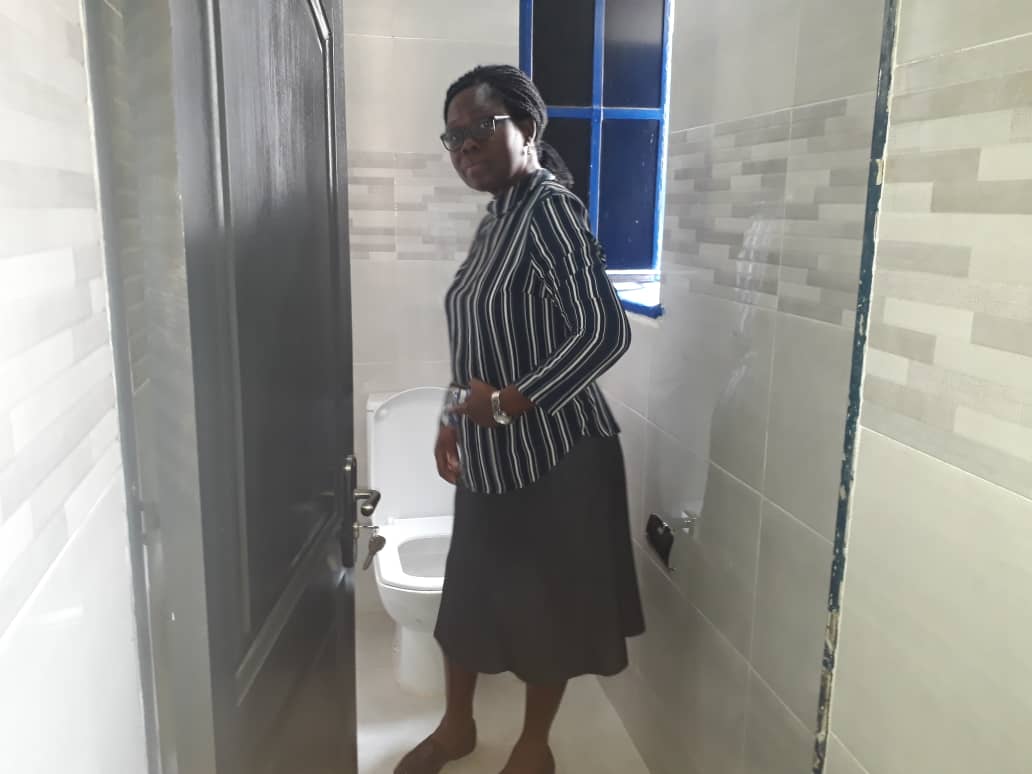
Staff Washroom Refurbishment Project (Feb 2020)

Staff Washroom Refurbishment Project (Feb 2020)

At the last AGM in April 2019, the OAA changed the rules of engagement for the year groups. With short notice the OAA 1980 year group had the responsibility of presenting a project for the next Founder’s day (Mar 2020), either in collaboration with the OAA 1970 year group or on their own.

The OAA 1970 year group had had ample time (circa five years) to come up with their project, worth $50,000. There was no way we could do same in such a short time and hence based on the school’s project list, chose the refurbishment of staff washrooms situtated under the landing of the main staircase in the Administration Block as a practical alternative.

Akora Hoffman Lartey led the sub project team and the completed project was handed over to the school authorities on Tuesday 4th February 2020.

Nii Darko Asante

Spotlight

Introducing Nii Darko Asante….

What have you been up to since 1980?

I went back to Achimota for sixth form, and somehow got involved in clubs and societies.  The first was GUNSA (the UN students association), and in the course of organising a seminar of sorts, an abortive invitation to JJ Rawlings (then an ex head of state) to speak at the GUNSA Seminar got me black-listed by the school administration (unknown to us Rawlings had been banned from speaking at any school).  I tried to avoid getting involved with the authorities after that, but another year and another event arrived.  This time I was roped into Booze’s (Joseph Orgle) Amalgamated Club and the organisation of a funfair. This time it was the attempt to have a live band play at the Swimming Pool during the funfair that fell foul of Canon Ankrah’s dislike of bands, and somehow I was at the centre of the debacle again – talk about lightning striking twice!

UST followed, and it took five years to complete my four year Chemical Engineering programme – thanks to JJ Rawlings (again!).  I stayed at UST for another two years for my National Service, and then went off to Manchester, UK to do my Masters in Process Integration (process design for minimum resource usage).  After an 18 month stint working with BP in London, I returned to Manchester for my PhD.  I completed my PhD in 1996, worked for one year as a Research Associate at Manchester University, and then took up a job with a software and consulting firm in Henley-on-Thames (near Reading, UK).  This was to last for only six months, because I left there to work for Aspen Technology Inc. in Warrington, UK (North West England), doing stuff that made it difficult to explain what I did for a living.  Finally returned home to Ghana in 2004.

So what do you do you do for a living?

About ten years ago, whilst considering career options, my daughter asked me: “so what do you actually do at work?”  At that time there was no simple answer to explain my frequent travel and the link to chemical engineering and software development. A long-winded answer was required, which I felt would bore her before I was finished.  I face a similar problem answering the question now, and to complicate things further I have had two other related but different careers and may be starting a fourth – as I have just resigned my position at the Energy Commission.

Career 1: Process Engineering Software Development & Implementation

In my first career I designed and wrote software in the UK for a process engineering software company, and implemented the software solutions in refineries and process plants around the world (after some practice I managed to come up with that compact answer to the question “what do you do?”)  The software implementation involved a lot of travelling, so I was away from home a lot.

Career 2: Lecturer in Food Process Engineering

I left Aspen Technology in 2004 to return to Ghana, where I eventually became a lecturer in the Food Process Engineering Department of the University of Ghana (and I finally had a straightforward answer to “what do you do?”).  Together with my colleagues we helped setup the Faculty of Engineering Sciences at Legon and graduated the first batch of students.

Career 3: Energy Regulator

In 2011 I joined the Energy Commission, and was responsible for regulating the electricity, natural gas and renewable energy sectors. I was there for eight years until my resignation at the end of 2019.

Which of your three careers has been most interesting?

Working in Ghana has been an interesting experience – especially working in the public sector.  The Energy Commission was not as bad as I had feared, but it still featured public sector attitudes of tolerating incompetence, inefficiency, waste and of course some corrupt and unethical behaviour.  One thing soon became clear however; politicians are both initiators and victims of corruption, and it’s not always easy to determine which is which.  Whilst the public always blames the politician for the corruption and inefficiency, civil and public servants are frequently just as guilty (if not more so) – but avoid all blame.

Being at the Energy Commission through the “dumsor years” was particularly interesting and leaves me with lots of tales to tell.  Trying to do what was right, even against the wishes of my boss or the Minister was quite an experience.  A memorable high or low point was when a sitting President described me as an “idiot at the Energy Commission…”, but that is for another story! 

What about family life?

I got married on Sunday December 29th, 1991 to Julie (nee Butler), a product of Wesley Girls High School, and have three children, Ewurabena, Ekow and Esi (25, 22 and 19).  During most of the time I was working in the UK however, I was on my own – my wife and kids having taken the lead to settle in Ghana. As such I was a pioneer in the use of internet calling software:  Long before the creation of WhatsApp and even Skype, I was using dial up modem connections and internet chat tools like Netscape’s “CoolTalk” to beat those killer phone tariffs to Ghana!

Travelling around the world has been fun – though not great for raising a family.  The frequent travel seemed pretty glamorous, but it left me with an uneasy feeling whenever I woke up in a hotel room (trying to remember what presentation or deliverable I had to complete before going for breakfast).  Most of my business trips were to boring industrial towns with little to do other than work, and a lot of time was spent in airport lounges waiting for a connecting flight…  It was not however always boring; occasionally on multi-week tips, it was possible to do something interesting over the weekend. On one trip to South Africa in the late 90s, we spent the weekend at a private game reserve used as a lion sanctuary and went for a morning walk through the game reserve with a pair of lion cubs as our companions. 

So what do you outside work?

My Christian faith has played a major role in my life – even though up to the end of my first year in UST I did not want to be associated with SU or Chrife.  In those days, I considered it an insult for someone to call me “chrife”! After leaving Achimota in 1982, I started a Music Group at the Ridge Church, and was one of the lead singers.  Whist at UST, I also sang with a group on campus called Abundant Life, as well as a group made up of musicians and singers from other groups. called Kush and Co.  Whilst in the UK I often played the keyboard for the church I attended, and became an elder and lay preacher at the church.  These days, my singing is limited to congregational singing and the occasional singing in the privacy of my home.

The issue of Landguards was highlighted by you on the GC WhatsApp group platform a couple of years ago. Would you say that issue is getting better or worse?

Could not really say, but I have no reason to believe it’s getting better. The thugs have found a way to make money and are not going to give up easily!  Apparently the landguards issue is strongly related to the so called political “vigilanteism” menace the country is grappling with.  So my guess is it’s probably getting worse.

You infamously once said that the challenge of leading GC sometimes felt like being a prison guard on Alcatraz. How does it feel now to be an “inmate”?

Leading the year group is not easy, but it’s great at character building!  Now that I’m freed of the responsibility it’s nice to be able to watch from the side lines without any obligation to intervene when “prison riots erupt at Alcatraz”!

I took over from our longest serving President, David Okai and served as President during the period of our first reunion in 2015.  I am really looking forward to our 2020 reunion, and to hopefully a great turnout!

Escaping from Alcatraz!

And finally, how will you be celebrating your impending birthday early next month?

Trying hard to let the day pass without too much of a fuss – lest the bones decide to remind me of my age!

Nii Darko Asante

1A, 2A, 3A, 4S1, 5S1, L6E, U6E

Aggrey House